


Dust Mites
More people are allergic to dust mites than anything else. Learn how to protect yourself.
-
About Dust Mites
Facts About Dust Mites and Dust Mite Encasings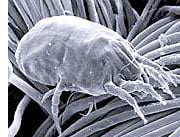 Dust mites are microscopic organisms closely related to spiders and ticks. Dust mites thrive in the warm, humid, dark conditions inside the fibrous materials that fill our homes: bedding, upholstered furniture, carpet, stuffed toys, and old clothing. Dust mites are scavengers that feed primarily on the dead skin that falls off the bodies of humans and animals. So, it's no wonder that they crowd around the places where we spend most of our time. It's not actually the dust mites that cause the sneezing, coughing, runny noses, stuffy noses, and congestion that plagues 20 million Americans. It's their even smaller waste particles. While the dust mites are feasting on dead skin cells deep inside our pillows, mattresses, and carpet, the things we do every day, like walking across the room, turning over in bed, and vacuuming, stir up dust mites' tiny waste particles for us to breathe. That's why it's important to cover your mattress and pillows with dust mite encasings with pore sizes in the range of 2 to 10 microns. Encasings with larger pore sizes may let dust mite allergen or dust mites themselves through, and encasings made with vinyl may not allow heat and moisture to escape easily. All of the encasings offered by National Allergy have a mean pore size within the recommended range of 2 to 10 microns. Additionally, all Independent tests of pore size by PMI, Inc. show that BedCare™ mattress and pillow encasings can also be used for bed bug protection*. Independent test data proved bed bugs and their eggs could not get through our fabrics or zippers. Continue reading →
Page
- Page Previous
- Page 1
- You're currently reading page 2