


Allergen Control Vacuums
The Best HEPA Vacuums For Controlling Allergens
- What Is House Dust?
- Why Doctors Recommend HEPA Vacuum Cleaners for Controlling Dust and Other Allergens?
- What Vacuum Technologies are Available?
- What Type of HEPA Vacuum is Right for Me?
- Comparison Chart for HEPA Vacuum Cleaners
- Tips for Vacuuming Your Home
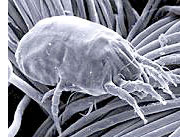 Why Doctors Recommend HEPA Vacuum Cleaners for Controlling Dust and Other Allergens?
 If you are familiar with "allergy lingo," you probably recognize the acronym "HEPA". It stands for High Efficiency Particulate Air, and has become the industry standard for both home air purifiers and vacuum filtration. A true HEPA filter, by definition, must remove 99.97% of particles at least as small as 0.3 microns in size. This is as small or smaller than lung-damaging dust, pollen, pet dander, bacteria, mold, plant spores, and even some viruses, smoke, and smog particles. Particles that are 10 microns or less are considered respirable and can settle deep into the lungs. Respirable particles make up over 99% of the 7 million particles in every breath you take! Virtually all of our vacuum cleaners are outfitted with HEPA filtration, and some like our HEPA Uprights and the Miele Complete C3 Marin Canister, can remove hundreds of the tiny harmful particles by way of various technologies.
What Vacuum Technologies are Available?
Upright vs. Canister. Efficient HEPA vacuums are available in a variety of styles and price ranges, and come with any number of features. One of the first questions to ask yourself is whether you prefer a canister or an upright. One of our vacuum representatives told me recently that canisters are much more popular in the Northeast and Europe than in other regions, while demand for uprights is much higher in the South and Southwest. True to statistics, I purchased a HEPA upright vacuum cleaner for my Georgia home. The advantages to a HEPA upright vacuum cleaner are its strength on carpeted surfaces and the ability to adjust the cleaning head to different carpet heights. I also like the relative simplicity of vacuuming with an upright ‒ no extra cords, nozzles or tubes unless I want to use them. The advantage of some newer uprights is their ability to act like a canister with an integrated extendable hose, a variety of attachments, and a long power cord. I find that my now-not-so-new HEPA upright vacuum is a little less agile in and around our living room furniture. Some manufacturers have since addressed this shortcoming. Miele S7 Series uprights feature a SwivelNeck™ design that easily maneuvers the upright around corners, curves, and edges, which can also be positioned to lay the vacuum virtually flat to the floor to reach under low furniture. In addition to the reduced maneuverability and limited ability of some uprights to reach into small places, uprights can also be louder and heavier than canister models. Knowing weight can be a deterrent for some people. The Miele Triflex HX2 Pro Cordless Stick Vacuum Cleaner is a cordless, stick, upright, and handheld vacuum cleaner weighing just 8 pounds. It's designed with a lower center of gravity for less body strain, and a more ergonomic handle for easier control. Size and storage can also be an issue for those of you who live in smaller living spaces ‒ you may find the lightweight, compact design of sticks like the Miele Triflex or canisters like the Miele CX1 Boost Parquet Bagless Canister Vacuum or the Miele Complete C3 Cat & Dog Canister Vacuum are better suited for your needs.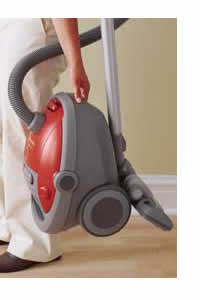 Bagged vs. Bagless. Bagless vacuum cleaners have become increasingly popular since their introduction in the early 1990s. Dyson has had a great amount of success dispelling the prevailing view that a bagless vacuum is not recommended for an allergy sufferer. In fact, we even warned against bagless vacuums because many of them are not well sealed, and particles are not settled well in the collection chamber, so when the user tries to empty them, they are greeted with an allergenic dust cloud.
This was an obvious concern of mine in the past, as well as many of my co-workers who tested a Dyson. At the time, I found that if done carefully, emptying the Dyson vacuum created no more dust exposure than emptying a typical bagged vacuum. Dyson has since made great strides in overcoming this issue in its newer models, which feature a bottom-empty tank that you open by pushing a slide lever for more hygienic disposal. However, I would still advise that a highly sensitive individual wear a high-efficiency mask when emptying a bagless vacuum cleaner or have someone else do it for you. My favorite part of going bagless is the obvious savings in not having to purchase replacement bags. And, in the case of Dyson vacuums, even the HEPA filters are lifetime and don't need replacing (nor do their belts or other parts for that matter).
Over the years, we have supported a core of bagged vacuum cleaners with HEPA final filters. Dustbag disposal, however, can also be a concern, especially for allergic individuals. All of our Miele vacuum models that use bags that also include an easy bag removal feature that protects the user from exposure to any of the bag's contents. If you are hesitant to part with your current vacuum but want more protection from allergens, using high-efficiency HEPA replacement bags is an important allergy-reduction option.
Power and Filtration. Most domestic vacuums measure power in wattage. Most canisters operate at about 1100 watts and most uprights pull between 1200-1400 watts. Wattage is an indicator of the power with which the motor spins. Some manufacturers also use figures, such as Air Wattage and Water Lift that measure the suction power of the machine.
It is important to remember that the inclusion of a HEPA filter is not indicative of more suction power, it only means the vacuum cleaner is equipped to remove smaller, allergenic particles. Some vacuums add additional filters to maximize particle removal. For instance, certain Nilfisk models have a permanent cloth filter to catch larger particles that might otherwise clog the HEPA filter. Whatever extra filtration a HEPA vacuum may use, it is important to know whether the vacuum's filtration system is well-sealed. A vacuum can claim to have HEPA filtration, but may leak allergenic particles from joints and covers.
Some think that a water-based filtration system will improve the efficiency of a vacuum cleaner. The AAAAI cautions against water-filtration machines, and research by Nilfisk America casts doubt on their safety for allergy sufferers. A study published by the American Lung Association's Respiratory Journal stated: "The sharp increase in airborne cat allergen associated with small particles when the water-filtering vacuum system was used was shown to be due to the formation of fine droplets by the machine. In contrast, the HEPA-filtered vacuum cleaner effectively contained the allergen." There is also the issue of possible mold growth to consider with a water-based vacuum.
Bagged vs. Bagless. Bagless vacuum cleaners have become increasingly popular since their introduction in the early 1990s. Dyson has had a great amount of success dispelling the prevailing view that a bagless vacuum is not recommended for an allergy sufferer. In fact, we even warned against bagless vacuums because many of them are not well sealed, and particles are not settled well in the collection chamber, so when the user tries to empty them, they are greeted with an allergenic dust cloud.
This was an obvious concern of mine in the past, as well as many of my co-workers who tested a Dyson. At the time, I found that if done carefully, emptying the Dyson vacuum created no more dust exposure than emptying a typical bagged vacuum. Dyson has since made great strides in overcoming this issue in its newer models, which feature a bottom-empty tank that you open by pushing a slide lever for more hygienic disposal. However, I would still advise that a highly sensitive individual wear a high-efficiency mask when emptying a bagless vacuum cleaner or have someone else do it for you. My favorite part of going bagless is the obvious savings in not having to purchase replacement bags. And, in the case of Dyson vacuums, even the HEPA filters are lifetime and don't need replacing (nor do their belts or other parts for that matter).
Over the years, we have supported a core of bagged vacuum cleaners with HEPA final filters. Dustbag disposal, however, can also be a concern, especially for allergic individuals. All of our Miele vacuum models that use bags that also include an easy bag removal feature that protects the user from exposure to any of the bag's contents. If you are hesitant to part with your current vacuum but want more protection from allergens, using high-efficiency HEPA replacement bags is an important allergy-reduction option.
Power and Filtration. Most domestic vacuums measure power in wattage. Most canisters operate at about 1100 watts and most uprights pull between 1200-1400 watts. Wattage is an indicator of the power with which the motor spins. Some manufacturers also use figures, such as Air Wattage and Water Lift that measure the suction power of the machine.
It is important to remember that the inclusion of a HEPA filter is not indicative of more suction power, it only means the vacuum cleaner is equipped to remove smaller, allergenic particles. Some vacuums add additional filters to maximize particle removal. For instance, certain Nilfisk models have a permanent cloth filter to catch larger particles that might otherwise clog the HEPA filter. Whatever extra filtration a HEPA vacuum may use, it is important to know whether the vacuum's filtration system is well-sealed. A vacuum can claim to have HEPA filtration, but may leak allergenic particles from joints and covers.
Some think that a water-based filtration system will improve the efficiency of a vacuum cleaner. The AAAAI cautions against water-filtration machines, and research by Nilfisk America casts doubt on their safety for allergy sufferers. A study published by the American Lung Association's Respiratory Journal stated: "The sharp increase in airborne cat allergen associated with small particles when the water-filtering vacuum system was used was shown to be due to the formation of fine droplets by the machine. In contrast, the HEPA-filtered vacuum cleaner effectively contained the allergen." There is also the issue of possible mold growth to consider with a water-based vacuum.
 Handheld Models. Nothing beats the convenience of a cordless, handheld vacuum for spills, kitchen crevices, and quick car cleanup. However, even small handheld vacuums can exhaust dirty air, which is why I recommend the Miele Triflex Vacuums. Each comes with extra-strong suction power, as well as attachments for various applications. These HEPA-filtered vacuums also double as hand vacs that can do the trick on small jobs without compromising the air you breathe.
What Type of HEPA Vacuum is Right for Me?
As you can see, we highly recommend HEPA filtration. Beyond that, the type of vacuum you choose largely depends on your living space, budget, and desire for various features like telescoping wands, headlights, extra attachments, etc.
- Use dirt-trapping doormats to lessen the dirt, debris, and pollutants that come into your home.
- Vacuum high-traffic areas more frequently, so dirt cannot sink too deeply into carpeting.
- Make three passes of the vacuum over areas with light soiling, but five to seven passes are necessary for heavily soiled areas.
- Turn off any turbo brushes or beater bars when vacuuming delicate rugs.
- Prolonged use of older-model "beater bars" will reduce carpet longevity.
- Full bags and dirty filters mean less suction, so be sure to replace vacuum bags and check filters often.
- If not vacuumed once a week, treat carpet and furniture with a dust-mite treatment product to reduce airborne allergens that settle on surfaces.
- Dust can accumulate along the edges of carpeting, so be sure to use an attachment to get down into the crevices, and don't forget to run the attachment along the baseboard.
I hope this page on HEPA vacuum cleaners has helped you learn more about vacuum cleaners and their role in keeping a clean, allergen-free home. The world of HEPA vacuums is an ever-expanding industry with hundreds of choices and lots of claims. We stand by our selection of HEPA vacuums and have tested them all for efficacy. Remember that we want you to be satisfied ‒ if, after 60 days, you are not happy with any product purchased from us, for any reason, we'll be happy to take it back.
This information is for educational purposes only. Always consult with your doctor first about your specific condition, treatment options, and other health concerns you may have.
Be sure to check out our other allergy blog posts for more tips and tricks on how to keep healthy all season long!